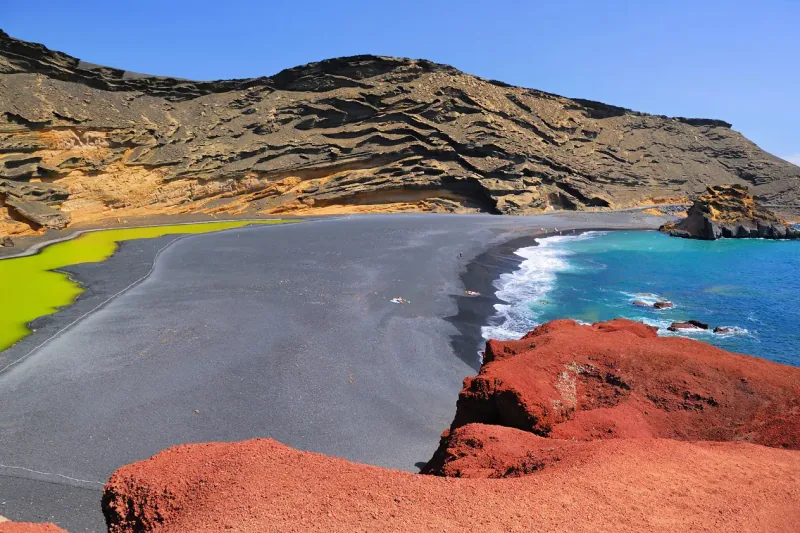
El Golfo and Charco de los Clicos
Lanzarote
On the southwest coast of Lanzarote, where the lava from Timanfaya met the Atlantic, the sea has devoured half of a volcanic crater to create one of the most photographed scenes in the Canary Islands: the Charco de los Clicos. A lagoon of intense emerald green, nestled between red and black rock walls, with a dark sand beach at its feet and the ocean breaking right next to it. It's geology, it's landscape, it's poetry.
The mystery of the green color
The emerald color of the Charco de los Clicos is due to a very high concentration of a plant organism called Ruppia maritima, an aquatic plant that thrives in its salty and shallow waters. The lagoon has no direct connection to the sea — the water filters through the porous volcanic rock — and its unique conditions of salinity, temperature, and isolation have created a singular ecosystem that is protected as a Natural Reserve.
The best viewpoint
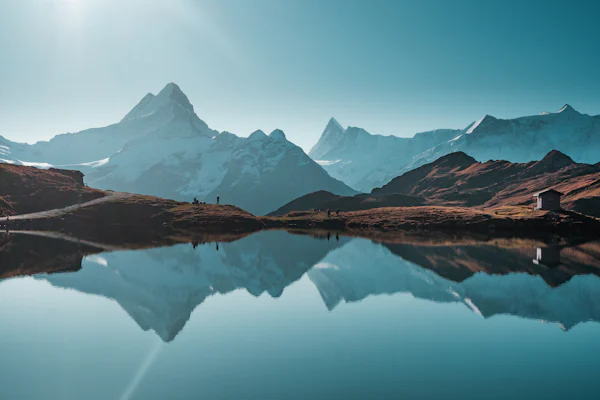
The Charco is viewed from an elevated viewpoint accessed by a short path from the parking lot. The views are spectacular at any time, but at sunset, the spectacle multiplies: the sun sinks into the Atlantic, tinting the sky orange and pink while the green lagoon shines with the last rays. It's one of those moments that justify a trip.
El Golfo: fishing village with a gastronomic soul
A few meters from the Charco, the village of El Golfo is a handful of white houses facing the sea with a row of restaurants offering the best fresh fish in all of Lanzarote. Vieja sancochada, fish broth, grilled limpets, octopus, shrimp — all freshly caught from the sea and cooked with the simplicity that such quality demands. Dining on a terrace in El Golfo with the sound of the waves is one of the great pleasures of the island.
The Charco de los Clicos is viewed from the viewpoint, but you cannot go down to the lagoon or the beach (it is protected). Arrive at least an hour before sunset to enjoy the light. For dining, the restaurants Bogavante and Casa Rafa are the most recommended in the village.
Complete the visit with a stop at Los Hervideros, a 5-minute drive south. There, the sea crashes against lava tubes forming natural geysers and a roar that on stormy days is overwhelming. And the Salinas de Janubio, still active, offer another visual spectacle with their checkerboards of colors between white, pink, and purple.
El Golfo condenses everything that makes Lanzarote special: volcanoes merging with the sea, colors that exist nowhere else, and a table with fresh fish where time stands still.
LIVVO Tip: Visit in low light for the best photos.
More to see in Lanzarote
Timanfaya National Park

Timanfaya National Park
Over 50 km² of volcanic landscape shaped by the 1730–1736 eruptions. The Ruta de Los Volcanes winds through a sea of solidified lava with smoking craters where underground temperatures exceed 600°C. The geothermal demonstrations at Islote de Hilario are a must.
Papagayo Beaches

Papagayo Beaches
A cluster of pristine golden-sand coves with crystal-clear water in the south of the island, protected within the Monumento Natural de Los Ajaches. Playa Mujeres, Playa de la Cera and Playa de Papagayo are the best known. Calm waters ideal for snorkelling.
Jameos del Agua

Jameos del Agua
A unique space created by César Manrique inside a volcanic tunnel, where art and nature merge in a breathtaking setting. Highlights include its interior lake, the natural auditorium and the blind crab, an endemic species.
Surfing in Famara
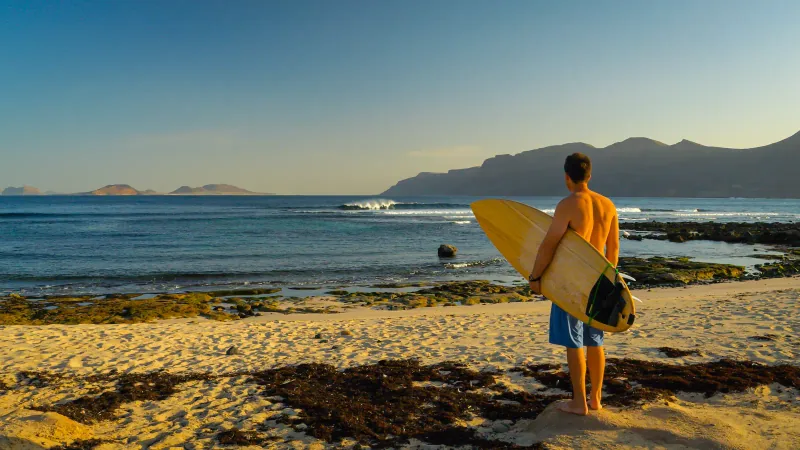
Surfing in Famara
With over 6 km of sand and consistent waves for much of the year, suitable for both beginners and advanced surfers. The dramatic backdrop of the Risco de Famara and the laid-back village nearby make it one of the most authentic spots on the island.