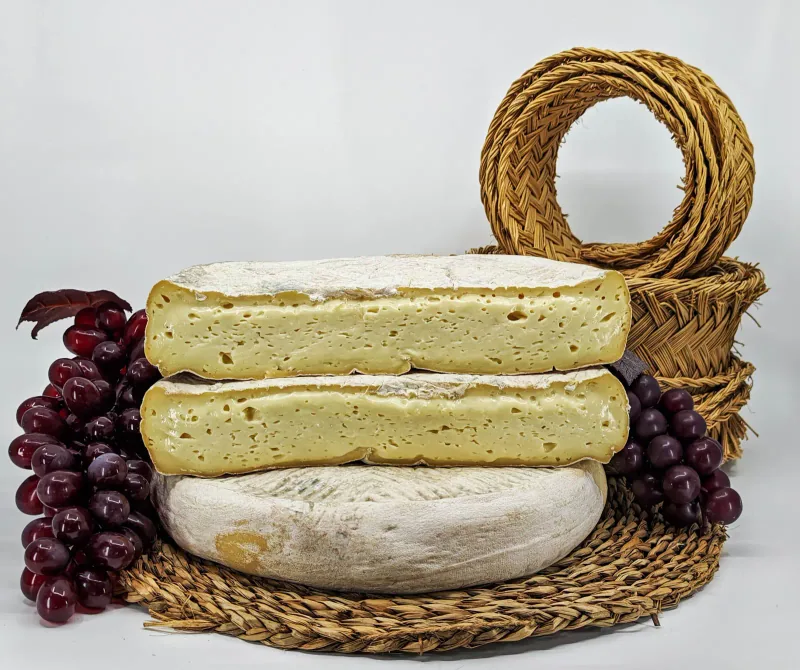
Queso de Flor de Guía
Gran Canaria
The Cheese That Sets with Flowers
Queso de Flor de Guía is a delightful anomaly on the Spanish cheese map: a cheese that uses neither animal nor industrial rennet, but rather the pistils of the wild thistle flower (Cynara cardunculus) to coagulate the milk. This ancient technique, dating back to the shepherds of northern Gran Canaria, produces a cheese with an inimitable flavor: slightly bitter, creamy, with floral nuances and a long finish that evolves on the palate.
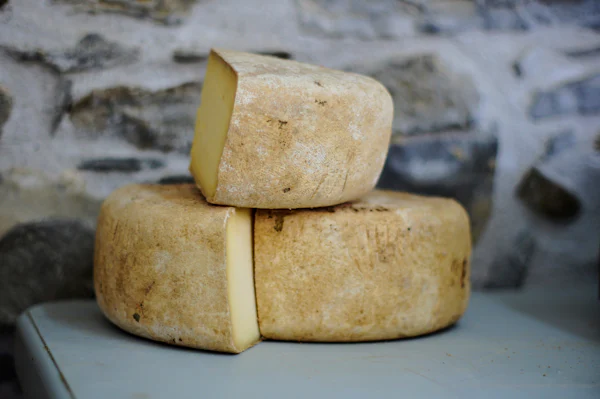
Production is concentrated in the municipality of Santa María de Guía and surrounding areas, where artisanal cheese makers maintain a process that has changed little over centuries. The milk—a blend of sheep with small amounts of cow—is coagulated with an infusion of thistle flowers handpicked in summer, molded in palm leaf molds, and matured in natural caves where constant humidity and temperature complete the transformation.
A Designation of Origin with History
Queso de Flor de Guía holds a Protected Designation of Origin, ensuring its origin and method of production. It is marketed in three maturities: fresh (mild flavor, soft texture), semi-cured (more intense, with buttery notes), and cured (firm, complex, with an elegant bitterness that makes it perfect for pairing with sweet Canary wines or palm honey).
The cheese dairies of Santa María de Guía are open to the public and offer tours where you can see the entire production process. Try all three maturities to understand the evolution of flavor. The perfect pairing: cured cheese with volcanic Malvasia from Gran Canaria or local rosemary honey.
Queso de Flor de Guía is much more than a gastronomic product: it is a living heritage that connects modern Gran Canaria with its pastoral roots, an example of how artisanal tradition can produce excellence without the need for industrialization. Each wheel of cheese contains the milk of sheep grazing in the midlands, the wild thistle flower from the Canary fields, and the hands of cheese makers who have learned the craft from generation to generation.
Queso de Flor de Guía is Gran Canaria condensed into a wheel: volcanic soil, wildflowers, artisan hands, and a flavor that exists nowhere else in the world.
LIVVO Tip: Try it at local restaurants or dairies in the area, paired with island bread and wine.
More to see in Gran Canaria
Maspalomas Dunes
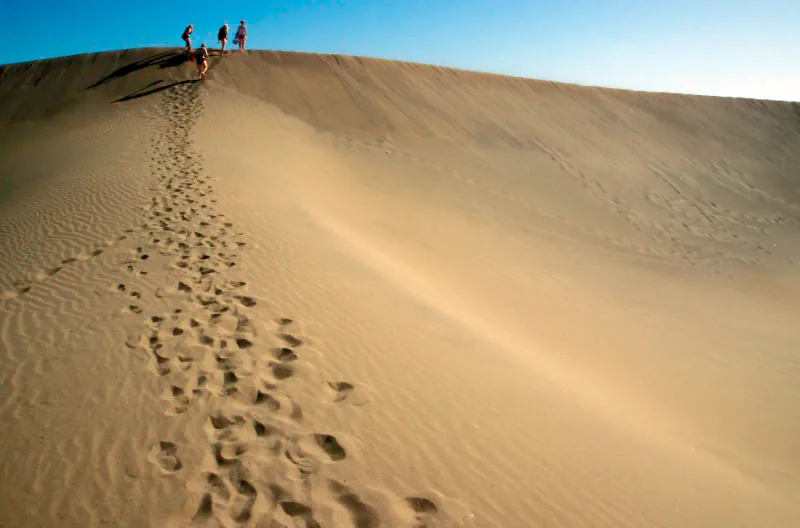
Maspalomas Dunes
A dune system beside the ocean that creates one of Gran Canaria's most iconic landscapes. This protected natural area combines sand, sea and lagoon, forming a landmark image of the island's south.
Roque Nublo

Roque Nublo
One of Gran Canaria's natural symbols, set in the mountainous interior. The trail up to this volcanic monolith offers sweeping views across the island and is one of the most popular hikes.
Las Canteras Beach

Las Canteras Beach
Urban beach stretching several kilometres, integrated into the city, with a natural reef protecting much of the shoreline. One of the island's most active spots — for swimming as much as for walking.
Puerto de Mogán

Puerto de Mogán
Coastal area known for its canals, marina and flower-lined streets. Its design and atmosphere make it one of the most carefully kept settlements in the south of Gran Canaria.