What to see in Lanzarote in 3 days: an essential route across the volcanic island
Lanzarote isn't simply visited: you cross it as if entering another planet. In just three days, the island can show you sleeping volcanoes, vineyards growing on ash, white villages, beaches with crystal-clear waters and works of art seamlessly woven into nature. The key is to plan the route well, because Lanzarote looks small on the map, but every stop invites you to stay longer than expected.
Day 1: the volcanic heart of Lanzarote
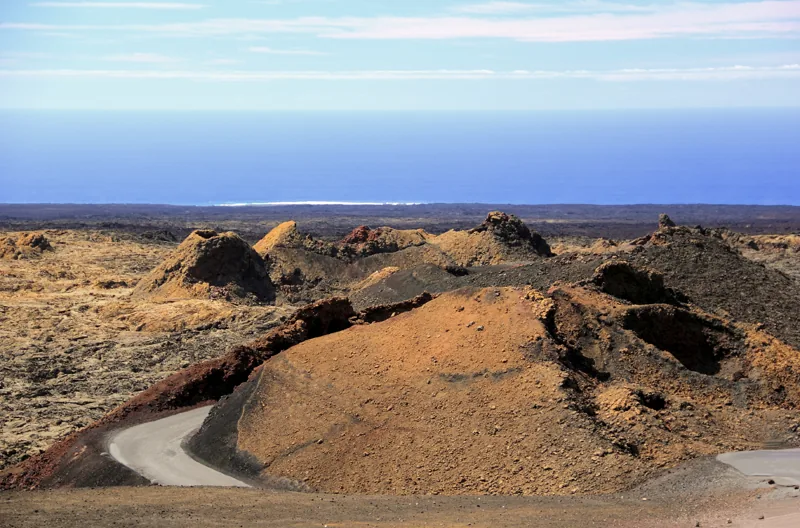
The first day should begin in Parque Nacional de Timanfaya, the great symbol of the island. There, the Montañas del Fuego remind us that Lanzarote was shaped by eruptions that completely transformed its landscape. La Ruta de los Volcanes lets you travel through craters, lava flows and ash fields on a circuit that feels suspended outside of time.
After Timanfaya, the route continues toward El Golfo, where the Charco de los Clicos surprises with its green lagoon at the edge of the Atlantic. Very close by, Los Hervideros show the force of the sea crashing against ancient lava formations. The day can end at the Salinas de Janubio, especially beautiful at sunset, when the sun tints the salt flats in shades of gold, pink and violet.
Day 2: art, caves and the north of the island
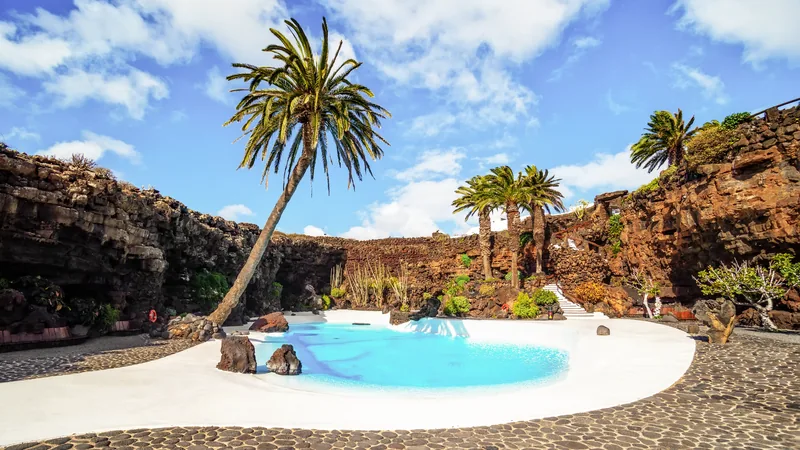
The second day is perfect for discovering the legacy of César Manrique. Jameos del Agua is one of the essential visits in Lanzarote: a space where a volcanic cavity becomes a cultural centre, garden, scenic pool and a symbol of the relationship between art and landscape. Very close by lies the Cueva de los Verdes, part of the same volcanic tunnel created by the Volcán de la Corona.
The route can continue toward the Mirador del Río, with views of the archipiélago Chinijo and La Graciosa. From there, the north of Lanzarote opens up in a sequence of panoramic roads, quiet villages and lava landscapes softened by palm trees, cacti and whitewashed houses.
Day 3: La Geria, villages and the southern coast
The third day should be devoted to La Geria, one of the most singular areas in the Canary Islands. Its vineyards grow protected by small walls of volcanic stone, creating a unique agricultural landscape. It is a perfect stop to understand how the island has turned a difficult land into a mark of identity.
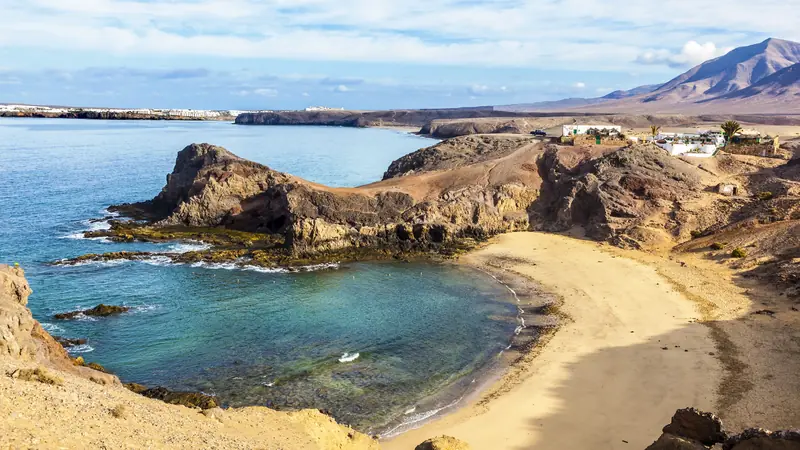
In the afternoon, Playa Blanca lets you close the trip by the sea. From here you can visit nearby beaches, walk around Marina Rubicón or simply enjoy the relaxed pace of the south. In three days you don't see all of Lanzarote, but you do grasp the essential: an island where nature, architecture and culture seem to have signed a pact of balance.
Frequently asked questions
Yes. Three days are enough to discover the island's essentials (Timanfaya, Jameos del Agua, La Geria and the south), although every stop tempts you to stay longer. It's enough time to grasp the island without rushing.
The first day is devoted to the volcanic heart: Timanfaya National Park and its Route of the Volcanoes, El Golfo with the Charco de los Clicos, Los Hervideros and the Janubio salt flats at sunset.
Jameos del Agua and, nearby, the Cueva de los Verdes (both part of the same volcanic tunnel), as well as the Mirador del Río, with views of the Chinijo archipelago and La Graciosa.
La Geria is Lanzarote's wine region, where the vines grow protected by small walls of volcanic stone. It is one of the most unique agricultural landscapes in the Canaries and an ideal stop for the third day, along with Playa Blanca and Marina Rubicón.