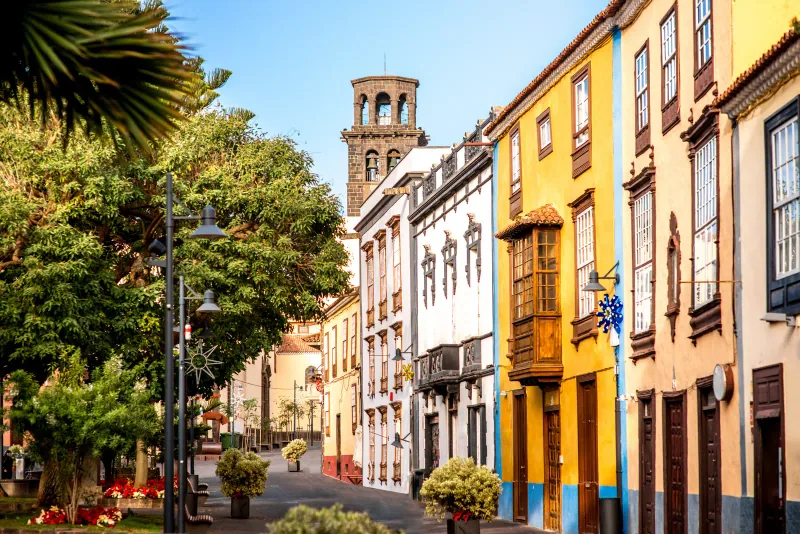
San Cristóbal de La Laguna
Tenerife
The City That Designed the New World
San Cristóbal de La Laguna is much more than a beautiful city: it is the city that served as a model for the urban layout of colonial cities in America. Founded in 1496, it was the first non-fortified city in the Canary Islands, designed with an innovative grid plan that was later replicated in Havana, Lima, and Cartagena de Indias. This universal value earned it the designation of a UNESCO World Heritage Site in 1999.
Strolling through La Laguna is like walking through a catalog of pure Canary colonial architecture. San Agustín Street is home to the most notable palaces: the Palacio de Nava, with its baroque facade of volcanic stone; the Casa de los Capitanes Generales; and the Palacio de Lercaro, now the headquarters of the Museum of History of Tenerife, where they say the ghost of a young woman who committed suicide for love still roams the halls.
University and Nightlife City
The University of La Laguna, founded in 1792, is the oldest in the Canary Islands and gives the city its young and vibrant character. Thousands of students enliven the streets, fill the tapas bars on Calle Herradores and Calle del Agua, and turn Thursday to Saturday nights into a continuous party that contrasts with the daytime solemnity of the palaces and convents.
Calle Herradores is the epicenter of tapas: dozens of bars offer creative tapas at student prices. For culture, don't miss the Teatro Leal (art nouveau) and the Cathedral of La Laguna with its neo-Gothic facade. The tram connects La Laguna with Santa Cruz in 30 minutes.
The churches of La Laguna are a little-known treasure: the Church of the Conception, with its Mudejar tower visible from all over the city; the convent of Santa Catalina, where cloistered nuns sell sweets through a turnstile; and the Cathedral, whose sober neo-Gothic facade hides a surprisingly bright interior. Each tells a chapter of the five centuries of history of this unique city.
La Laguna is the living memory of the Canary Islands: a city where the colonial past coexists with university energy and where every palace has a story to tell.
LIVVO Tip: Explore the city on foot to appreciate its details.
More to see in Tenerife
Parque Nacional del Teide
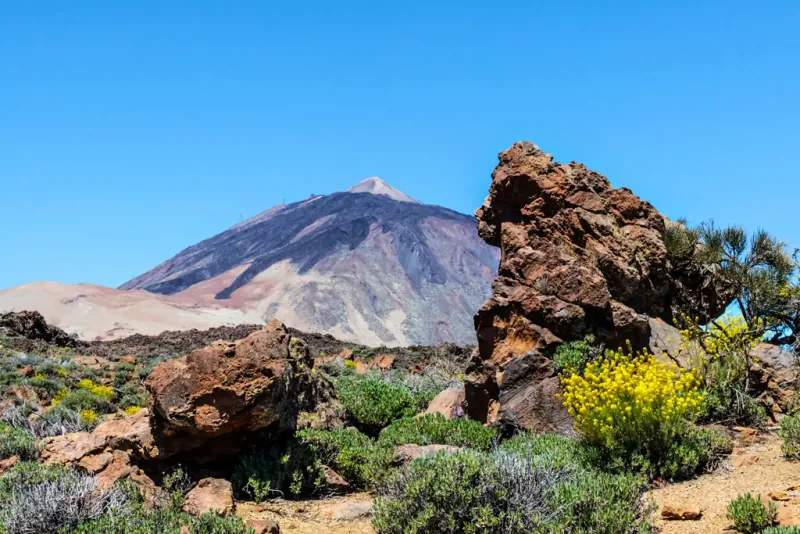
Parque Nacional del Teide
The volcanic landscape of El Teide defines the centre of the island with rock formations, lava flows and vast volcanic plains. The scenery changes with altitude, from arid zones to high mountain terrain with open views.
Roques de García
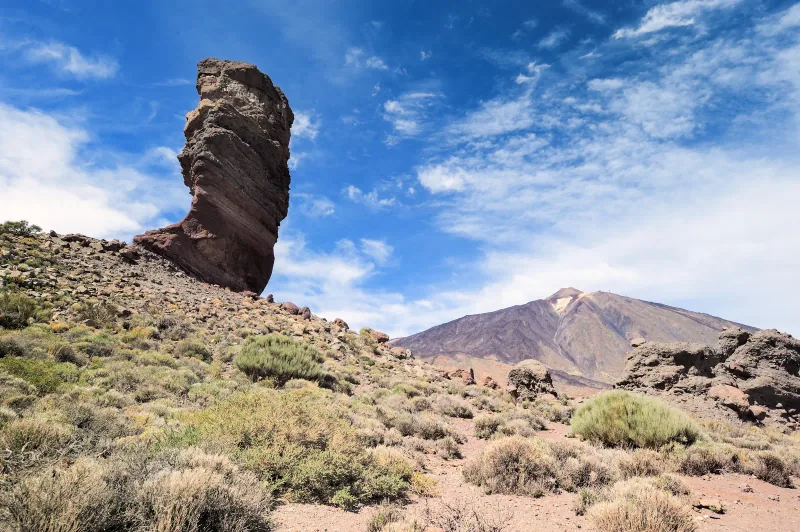
Roques de García
A group of volcanic formations within Parque Nacional del Teide, including the iconic Roque Cinchado. The trail allows visitors to explore this environment on foot with views of El Teide.
Parque Rural de Anaga
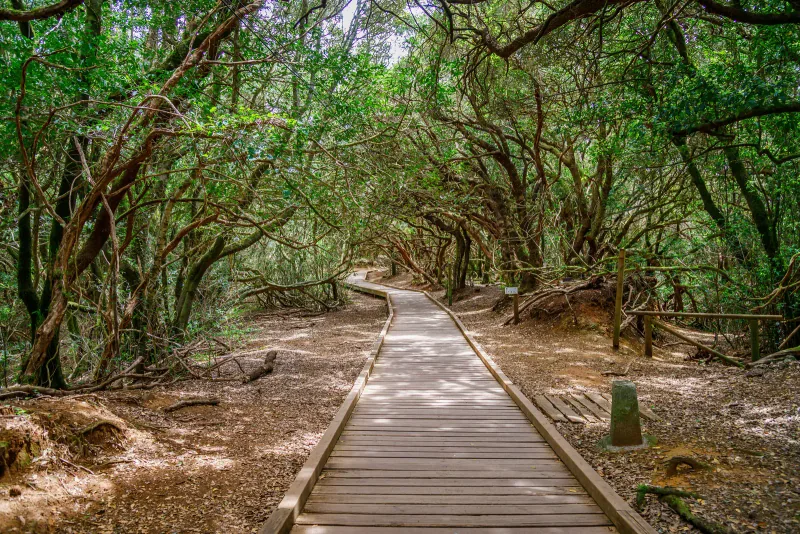
Parque Rural de Anaga
An area of laurel forest with trails through mountains, ravines and viewpoints. The green, misty landscape contrasts sharply with the rest of the island.
Los Gigantes Cliffs
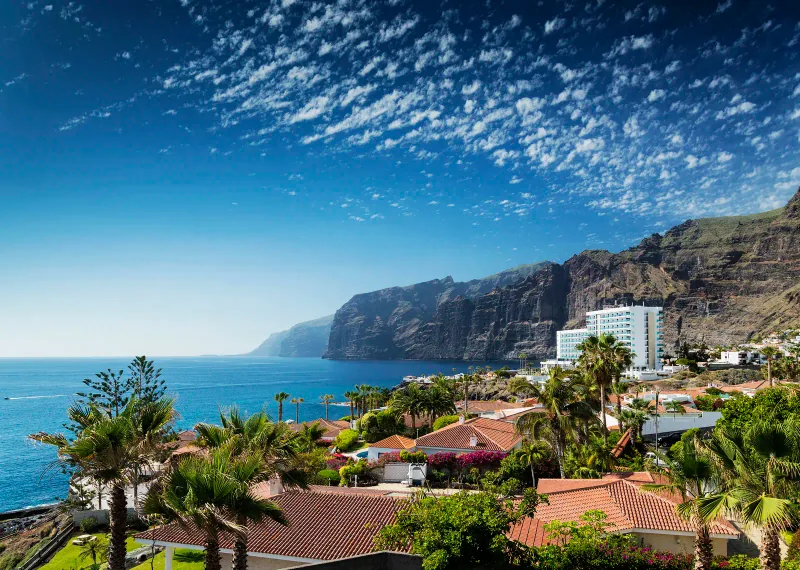
Los Gigantes Cliffs
Volcanic walls that drop vertically into the sea along the western coast. The height and scale of the cliffs are best appreciated from the water or from viewpoints.