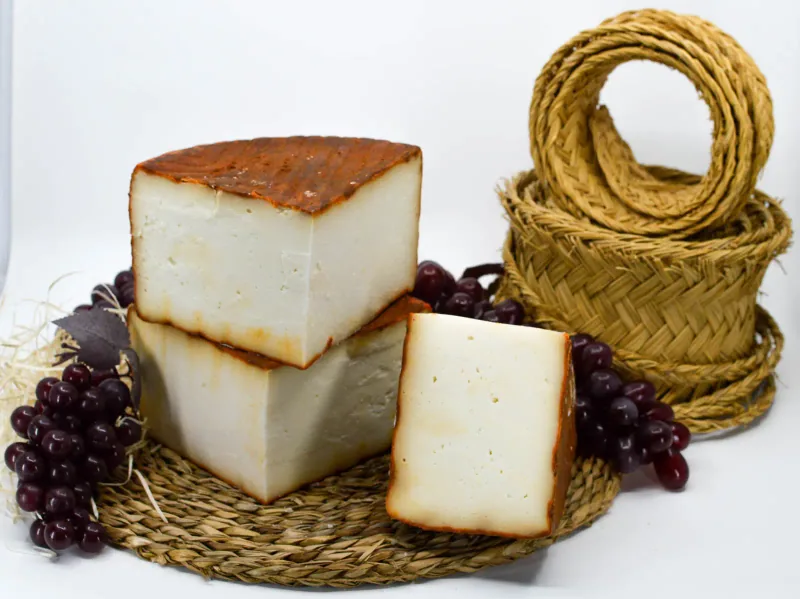
Queso Majorero
Fuerteventura
In Fuerteventura, there are more goats than people. This is not an exaggeration: the island of Fuerteventura hosts one of the largest goat populations in Spain, and this millennia-old coexistence between humans and animals has resulted in one of the most awarded cheeses in the world. But Fuerteventura's gastronomy goes far beyond cheese: it is a cuisine of survival turned into a delicacy, born from aridity, the sea, and inventiveness.
Majorero Cheese: Gold with Protected Designation of Origin
Majorero cheese is the only Spanish goat cheese with Protected Designation of Origin, and the list of international awards it has accumulated is endless. It is made exclusively with milk from the Majorera goat — a native breed adapted to the island's arid climate — and can be found fresh, semi-cured, or cured, often coated in paprika, gofio, or oil. The result is an intensely flavored cheese, slightly acidic, with nuances ranging from butter to nuts depending on its maturation.
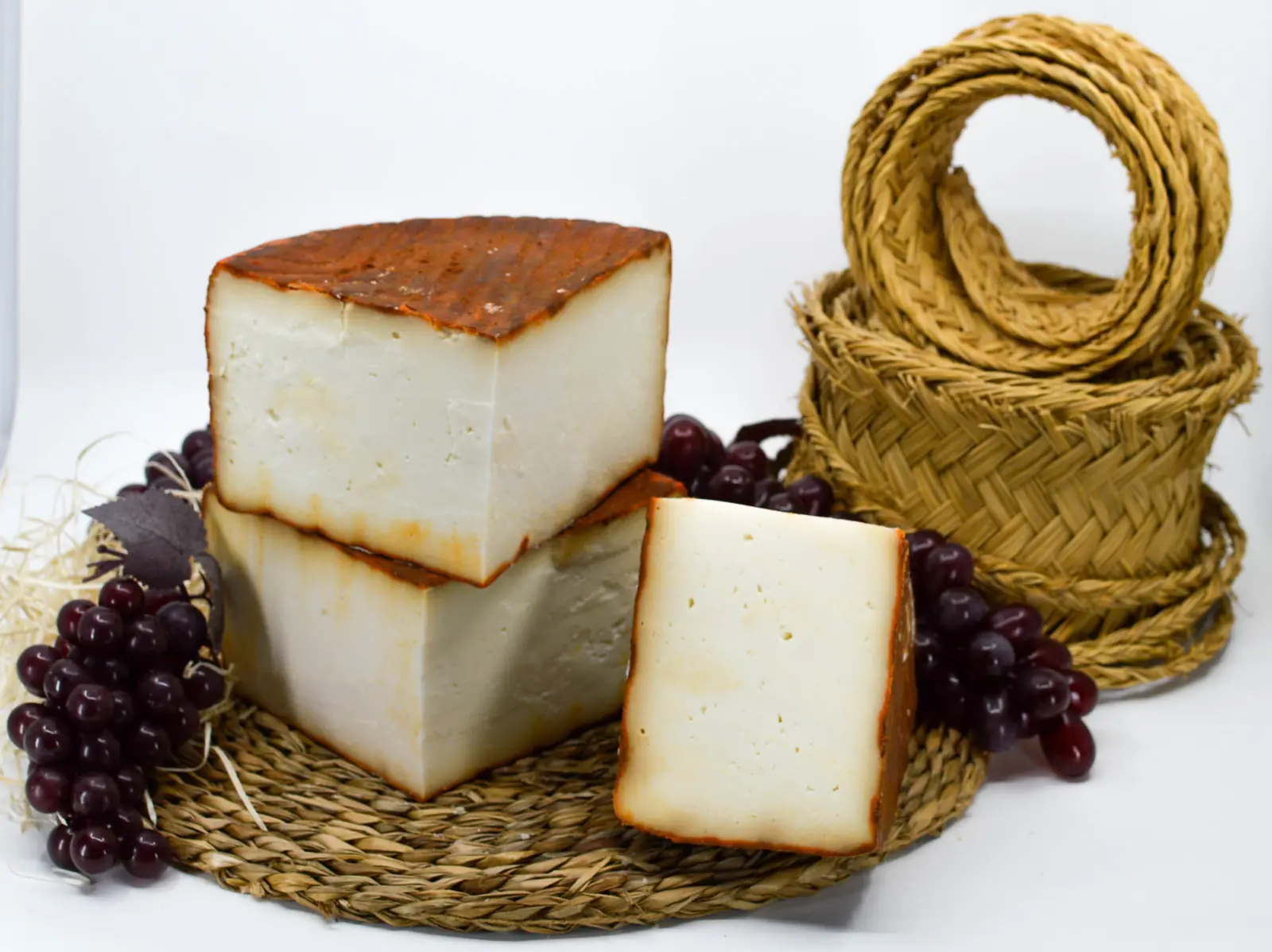
Artisanal Cheese Factories Open Their Doors
Several cheese factories on the island offer guided tours and tastings. Quesería Maxorata, in Tuineje, is the largest producer and has a comprehensive interpretation center. But the real gems are in the small family farms where two or three people milk their own goats and make cheese by hand, as has been done for centuries. Asking in the inland villages is the best way to find them.
Beyond Cheese: Majorera Cuisine
Goat meat is the other main star: stewed in Canarian sauce, roasted in the oven, or as grilled ribs. Papas arrugadas with mojo (paprika red or cilantro green) are ubiquitous. Gofio kneaded with honey, almonds, and cheese is an ancestral dessert. And from the sea come viejas, samas, and grilled limpets, served in coastal beach bars with the simplicity that good produce demands.
The Lajares artisan market (Saturday mornings) is the best place to buy Majorero cheese directly from producers. Quesería Maxorata in Tuineje opens for visits and tastings. To eat goat in sauce, look for restaurants inland: Betancuria, Antigua, and Pájara.
In Fuerteventura, you eat as you live: with what the land, the sea, and the goats provide. Without artifices. And it turns out that when done well, it's extraordinary.
LIVVO Tip: Try it on a platter with mojo sauce or visit a local dairy.
More to see in Fuerteventura
Corralejo Dunes
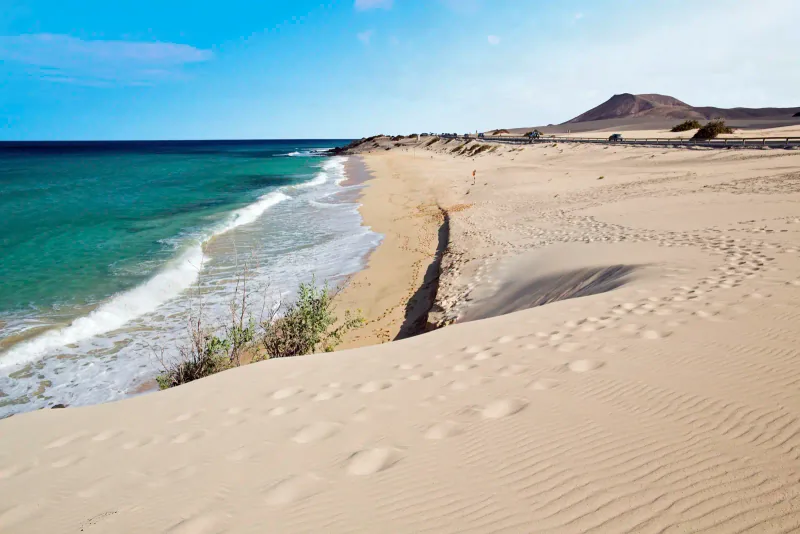
Corralejo Dunes
A dune landscape stretching alongside the ocean in the north of Fuerteventura. The Corralejo Natural Park protects this setting where white sand meets the sea, creating wide open beaches with views of Lobos Island.
Cofete Beach

Cofete Beach
At the southern tip, Cofete is a beach stretching over 12 km, framed by the Jandía mountains. Its remoteness and the unpaved access track are part of the experience.
Windsurfing & Kitesurfing in Sotavento
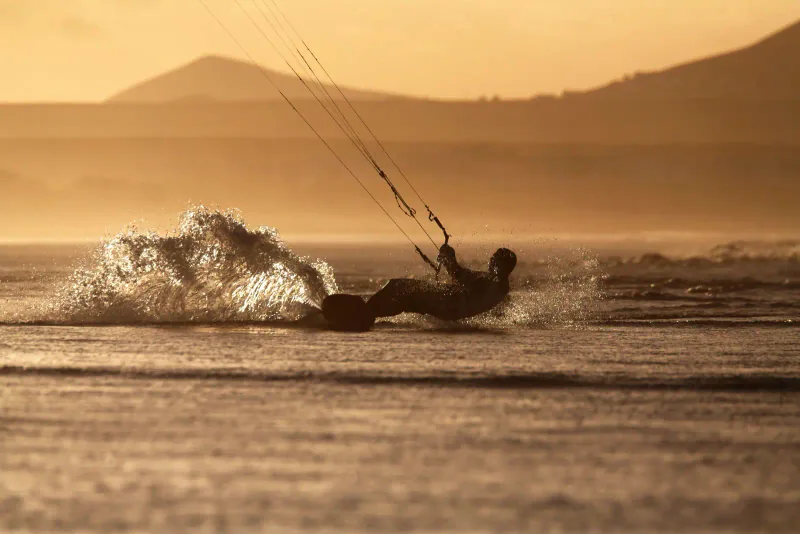
Windsurfing & Kitesurfing in Sotavento
On the Jandía Peninsula, Sotavento stands out for its tidal lagoons, which create wide areas of shallow water. Combined with the constant wind, this makes it one of Europe's top windsurfing and kitesurfing destinations.
Isla de Lobos
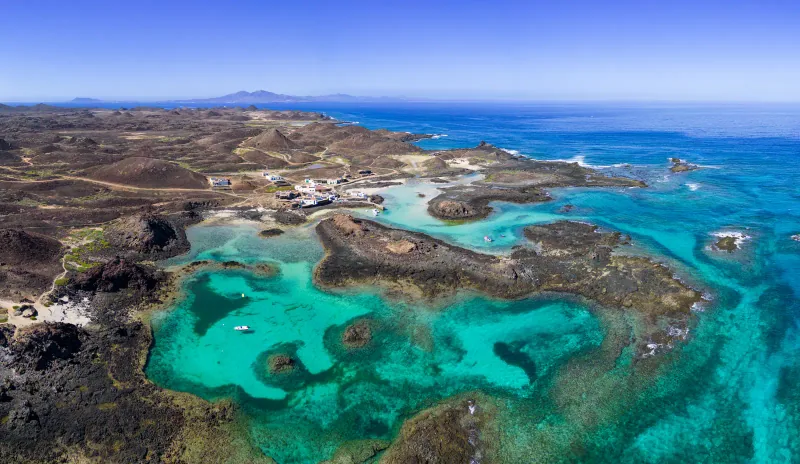
Isla de Lobos
Just minutes by boat from Corralejo, this protected islet offers volcanic trails, small coves and crystal-clear waters. It can be walked in a day, passing spots like La Concha beach and the Martiño lighthouse.