
Volcán del Cuervo
Lanzarote
The Volcán del Cuervo is one of the most accessible volcanoes in Lanzarote and one of the best ways to get close to the island's geology without the need for long excursions. The circular route allows you to walk on the volcanic ash bed, circle the crater, and, in some sections, peer inside, where you can see the walls formed by the 18th-century eruptions.
The trail starts from the parking area located next to the LZ-67 road, within the Los Volcanes Natural Park. The walk, about 3 km with low difficulty, crosses a sea of solidified lava with views of Timanfaya and a succession of secondary volcanic cones. It is one of the few areas where you are allowed to walk freely among the volcanic landscape, making the experience especially intimate and photogenic.
Wear closed shoes and bring enough water: the terrain of volcanic gravel is slippery, and there is no shade throughout the route. The early morning hours or late afternoon are the best times to avoid the heat and take advantage of the light for photography.
Walking the Cuervo is like peering into the origin of Lanzarote: an island sculpted by fire where every step reminds you that the landscape still holds the memory of the eruptions.
LIVVO Tip: Do it early morning or at dusk to avoid the heat.
More to see in Lanzarote
Timanfaya National Park

Timanfaya National Park
Over 50 km² of volcanic landscape shaped by the 1730–1736 eruptions. The Ruta de Los Volcanes winds through a sea of solidified lava with smoking craters where underground temperatures exceed 600°C. The geothermal demonstrations at Islote de Hilario are a must.
Papagayo Beaches

Papagayo Beaches
A cluster of pristine golden-sand coves with crystal-clear water in the south of the island, protected within the Monumento Natural de Los Ajaches. Playa Mujeres, Playa de la Cera and Playa de Papagayo are the best known. Calm waters ideal for snorkelling.
Jameos del Agua

Jameos del Agua
A unique space created by César Manrique inside a volcanic tunnel, where art and nature merge in a breathtaking setting. Highlights include its interior lake, the natural auditorium and the blind crab, an endemic species.
Surfing in Famara
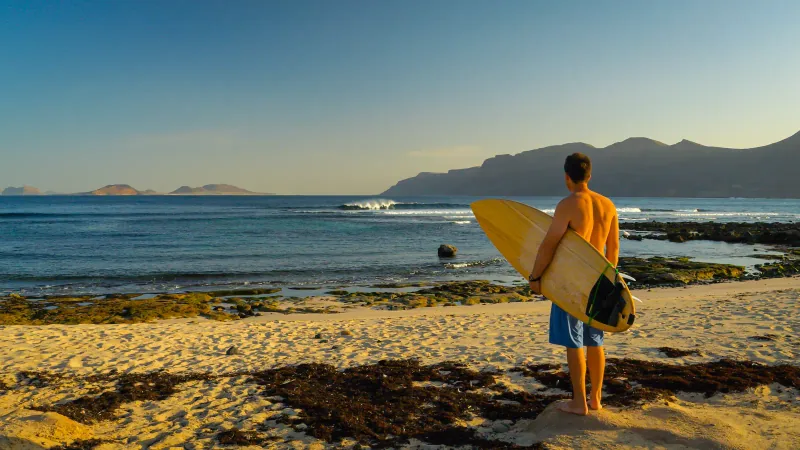
Surfing in Famara
With over 6 km of sand and consistent waves for much of the year, suitable for both beginners and advanced surfers. The dramatic backdrop of the Risco de Famara and the laid-back village nearby make it one of the most authentic spots on the island.