
El Cotillo
Fuerteventura
El Cotillo has something that few coastal towns in the Canary Islands retain: authenticity. This former fishing village in the northwest of Fuerteventura has grown modestly, maintaining its human scale, its low whitewashed houses, and a harbor where fishermen still set out every morning. But what truly makes it special are its two radically different coasts, separated by just a few hundred meters.
The northern lagoons: dreamy natural pools
To the north of the village, a succession of small coves with fine white sand hide behind volcanic rock reefs that break the waves and create natural pools of crystal-clear, calm waters. These are the famous lagoons of El Cotillo: La Concha beach, Los Lagos beach, and others without names that you discover while walking along the coast. The water, an almost artificial turquoise, is shallow and perfect for children and for floating without worries.
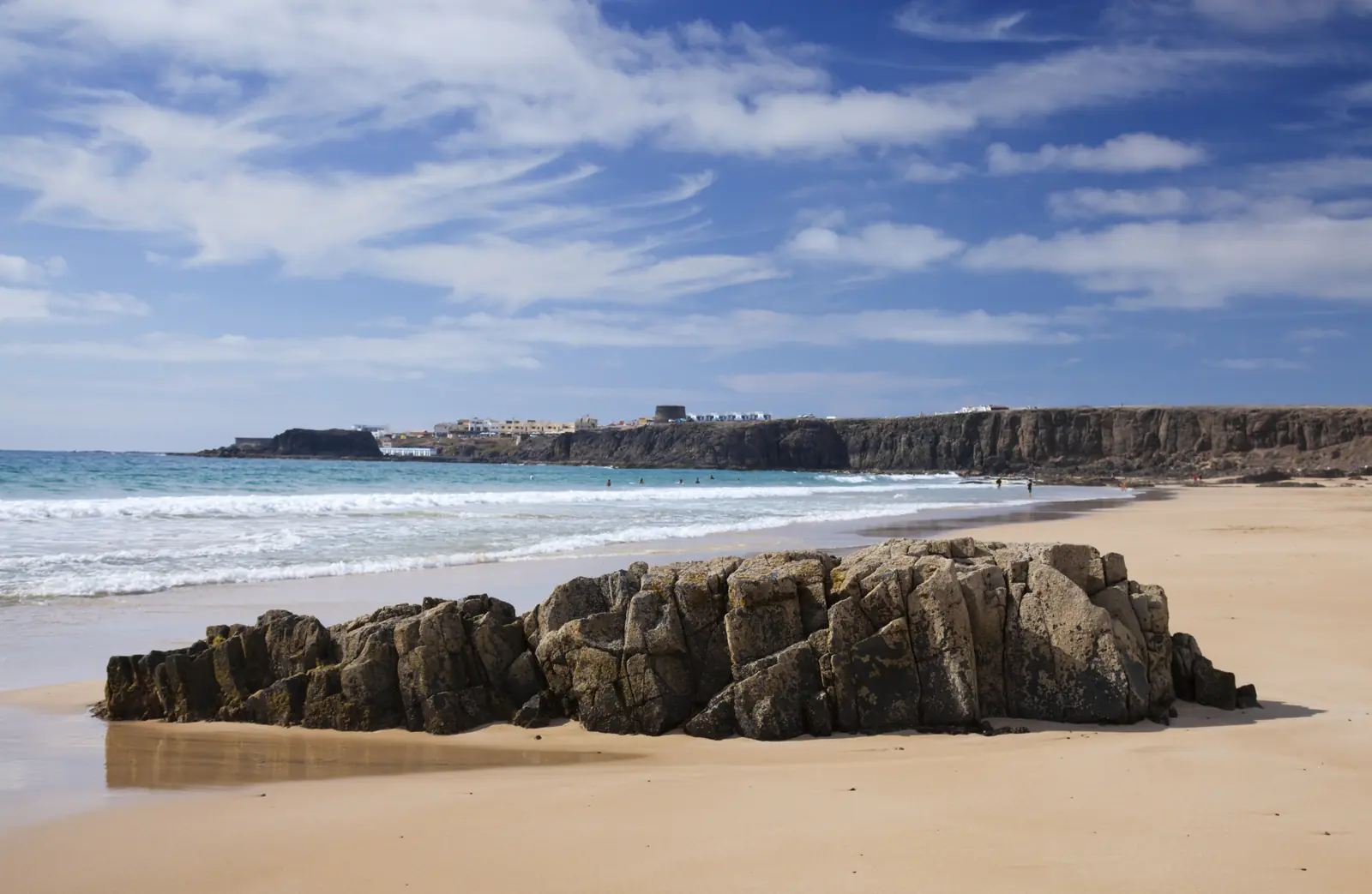
The southern coast: waves and sunsets
To the south of the village, the landscape changes completely. Open beaches with golden sand receive the Atlantic waves unfiltered, creating perfect conditions for surfing. El Cotillo Sur beach and Piedra Playa are regular spots for local and visiting surfers. And at sunset, this entire coast becomes a natural balcony to sunsets that paint the sky orange, pink, and violet.
The Tostón Lighthouse and the harbor
At the northern end, the Tostón Lighthouse watches over the coast from its red and white tower. Next to it, a small traditional fishing museum tells the maritime history of the village. Back in the center, El Cotillo's harbor hosts restaurants where you can eat fresh fish of the day — fried vieja, fish stew, grilled octopus — with your feet almost in the water and views of the sunset.
The northern lagoons are perfect for families with children: calm waters, shallow depth, and soft sand. For dining, La Vaca Azul next to the Tostón castle has the best views. Arrive early in summer: parking fills up quickly.
El Cotillo is two worlds in one: the absolute calm of its lagoons and the wild energy of its waves. All this, with the simplicity of a village that remains a fishing community.
LIVVO Tip: The lagoons are ideal for swimming when the sea is rougher elsewhere.
More to see in Fuerteventura
Corralejo Dunes
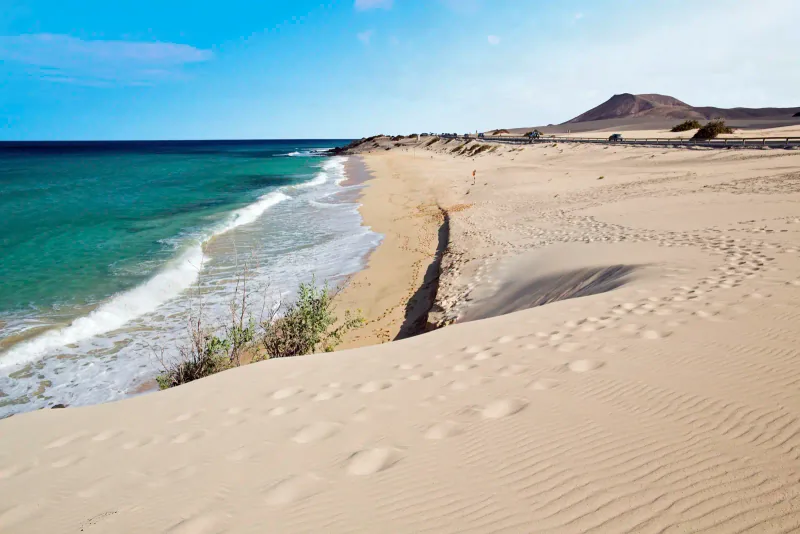
Corralejo Dunes
A dune landscape stretching alongside the ocean in the north of Fuerteventura. The Corralejo Natural Park protects this setting where white sand meets the sea, creating wide open beaches with views of Lobos Island.
Cofete Beach

Cofete Beach
At the southern tip, Cofete is a beach stretching over 12 km, framed by the Jandía mountains. Its remoteness and the unpaved access track are part of the experience.
Windsurfing & Kitesurfing in Sotavento
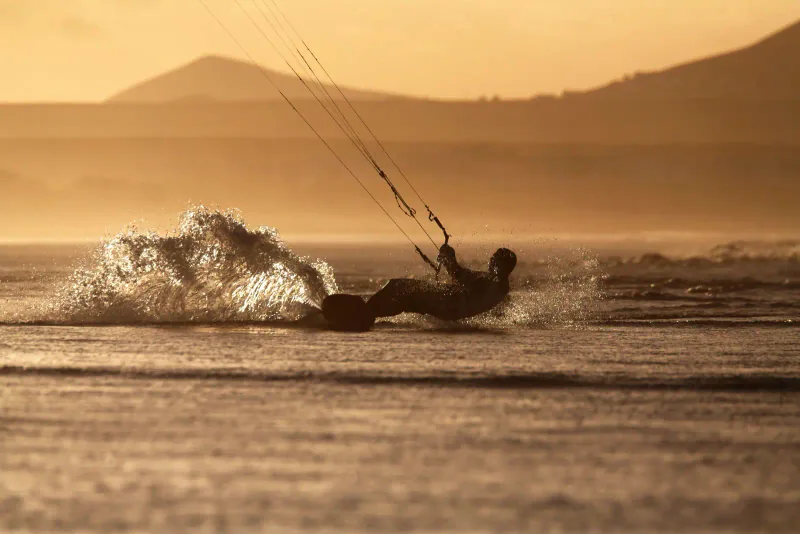
Windsurfing & Kitesurfing in Sotavento
On the Jandía Peninsula, Sotavento stands out for its tidal lagoons, which create wide areas of shallow water. Combined with the constant wind, this makes it one of Europe's top windsurfing and kitesurfing destinations.
Isla de Lobos
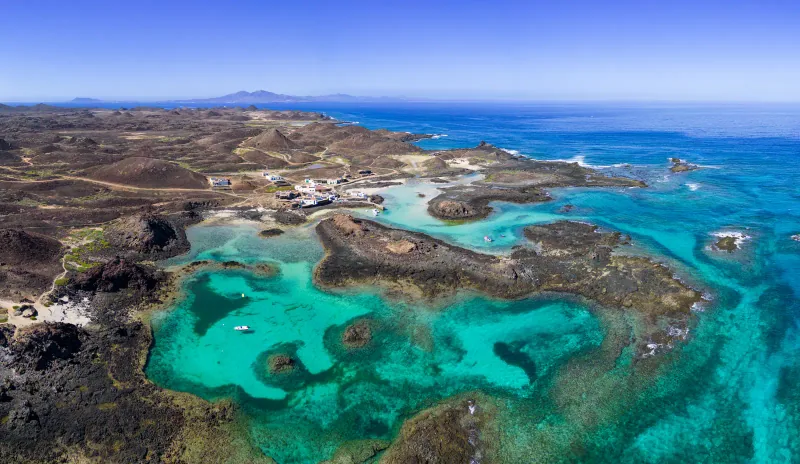
Isla de Lobos
Just minutes by boat from Corralejo, this protected islet offers volcanic trails, small coves and crystal-clear waters. It can be walked in a day, passing spots like La Concha beach and the Martiño lighthouse.